



As we move into 2026, I’ve found myself spending more time in conversations about data center cooling. When cooling becomes part of broader operational and growth discussions, it’s a signal that something fundamental has changed.
The rapid rise of AI, increasing pressure on energy systems, and growing sustainability expectations are all converging, forcing enterprises to rethink how data centers are designed, cooled, and scaled.
From a business operations perspective, cooling is not purely a technical decision. It directly affects performance consistency, cost predictability, energy efficiency, and long-term resilience. The question many organizations are now asking is simple: Are our cooling strategies aligned with where our workloads and business demands are headed?
Here’s what’s driving the evolution of cooling systems and how UnitedLayer is helping customers stay ahead of the curve:
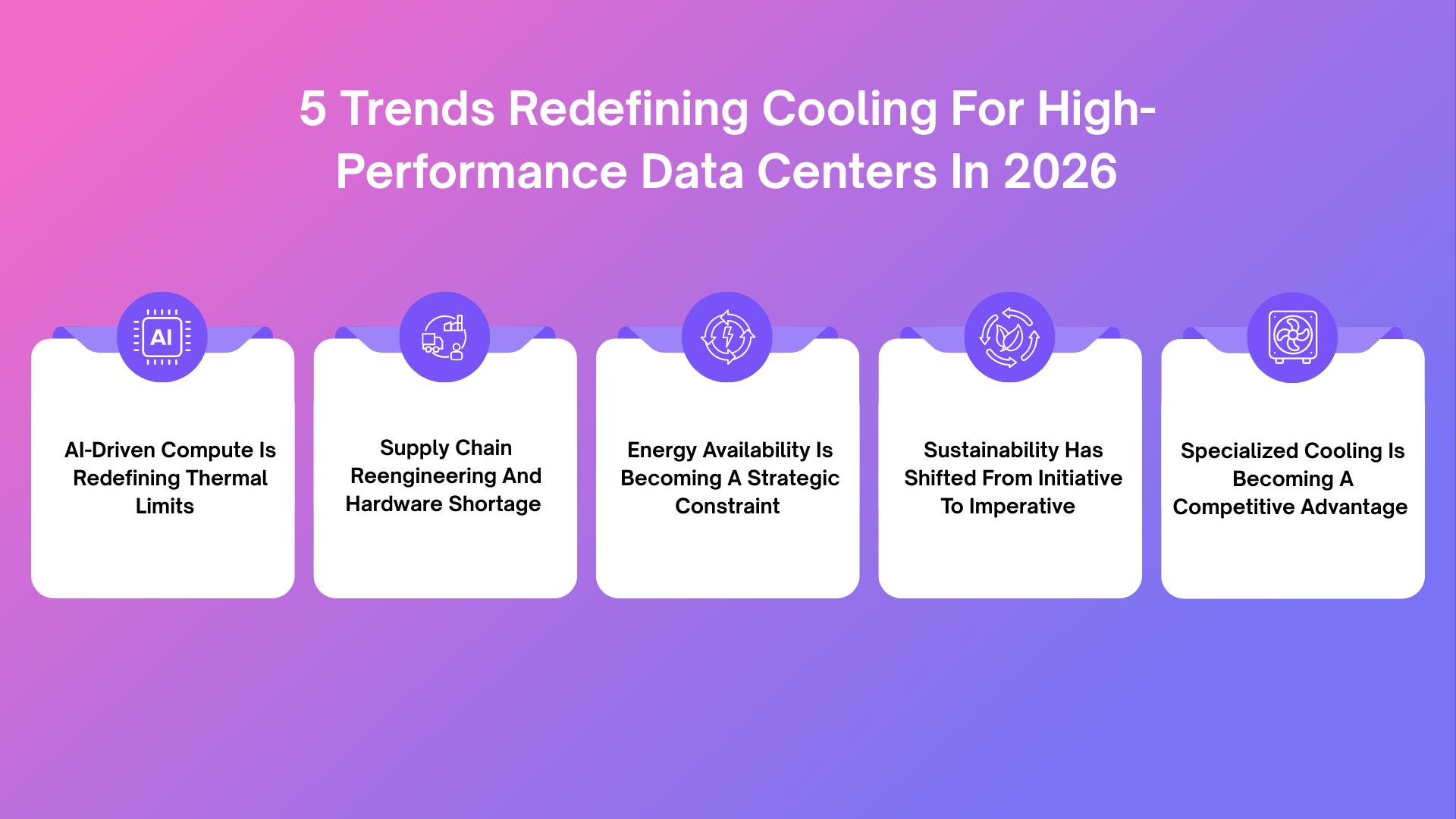
High-performance workloads are pushing rack densities to levels that traditional air-based cooling was never designed to support. Heat is generated closer to the compute layer and in far more concentrated ways.
So how do organizations sustain performance without overengineering infrastructure? Increasingly, the answer lies in more precise cooling architectures, particularly liquid-based approaches that remove heat from the source.
This thinking shaped how we designed UnitedLayer’s UPC AI Cloud built to support high-density environments through advanced liquid cooling and AI-optimized thermal management, without compromising reliability or scalability.
The global demand for GPUs, specialized chips, and advanced cooling components has exposed how vulnerable traditional supply chains can be.
What happens when critical hardware isn’t available on time? From an operational standpoint, these delays can ripple across innovation plans and revenue timelines.
That’s why resilient, multi-tier sourcing and strong vendor partnerships have become a core part of infrastructure planning at UnitedLayer, helping ensure faster provisioning and continuity even during periods of global shortage.
Data centers already consume a significant share of global electricity, and AI adoption continues to push that demand higher. The question isn’t just how much power is available, but how efficiently it’s being used.
Cooling systems account for a substantial portion of overall energy consumption, which makes efficiency non-negotiable. Intelligent power automation, higher compute-per-watt designs, and flexible hybrid architectures allow enterprises to scale responsibly while keeping energy usage predictable and controlled.
Sustainability also features prominently in many conversations today. Expectations from regulators, investors, and customers are becoming more concrete, and enterprises are being asked to show measurable ESG progress. How do organizations balance sustainability goals with performance and cost discipline?
At UnitedLayer, sustainability is embedded in how we design infrastructure from energy sourcing to AI-driven cooling optimization. Our UPC Sovereign Cloud and sustainability-focused infrastructure offerings are built to help enterprises reduce environmental impact while improving operational efficiency.
Technologies such as direct-to-chip liquid cooling, AI-assisted thermal optimization, and customized cooling designs are no longer experimental.
When applied thoughtfully, they allow cooling to support growth and performance rather than constrain it.
As Monish Salehittal quotes, “Thoughtful cooling strategies don’t just optimize performance they reduce energy consumption, lower environmental impact, and support long-term sustainability goals.”
Looking ahead, I believe cooling will play an even more defining role in how infrastructure decisions are made. Enterprises that approach it with clarity balancing performance, efficiency, and sustainability will be better positioned to adapt as demands evolve.
At UnitedLayer, our focus remains on helping organizations navigate this shift with AI-optimized platforms and cooling strategies designed for the realities of the future.

Global Business Director




Monish Salehittal