

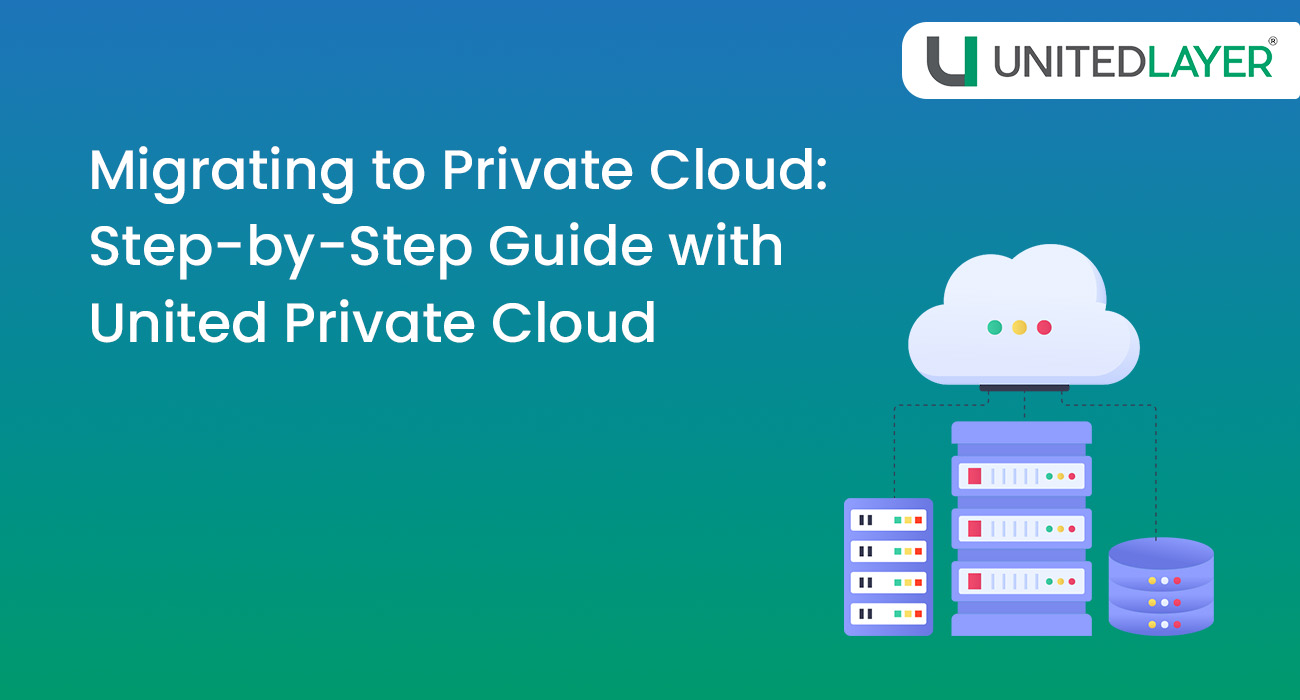
As we navigate the complexities of 2026, the initial “public cloud first” gold rush has matured. We have entered a more nuanced, performance-driven era of “Private Sovereignty.” For years, enterprises accepted the hidden costs of public cloud. They paid unpredictable data egress fees and dealt with multi-tenant latency as the price of agility. Today, however, that narrative has shifted significantly. The rise of Generative AI and strict global data residency laws has changed the game.
Consequently, private cloud is now the premier choice for organizations that require absolute control. It offers this power without sacrificing the flexibility of the cloud experience.
The core of this shift lies in the United Private Cloud (UPC). UnitedLayer built UPC as a software-defined platform specifically for the most demanding workloads of 2026. Because of this focus, migration is no longer a “fear-based” decision centered on avoiding downtime. Instead, it is a strategic “freedom-based” move. Organizations moving to UPC report 30% to 50% savings in Total Cost of Ownership (TCO) compared to public hyperscalers. These savings do not just come from lower compute costs. They also stem from the elimination of “surprise” bills and the sheer efficiency of a dedicated environment.
The term “migration paralysis” describes the hesitation IT leaders feel when leaving public infrastructure. Data gravity, application breakage, and weeks of service interruption represent very real concerns. Fortunately, United Private Cloud addresses these risks through a “white glove” managed service model. This is more than just a platform. It is an end-to-end migration partnership. Our team handles the heavy lifting, from initial discovery to ongoing management.
UPC’s methodology relies on a battle-tested 7-Step Playbook. We designed this process to make migration invisible to your end-users. First, the process begins with a comprehensive Discovery & Audit during week one. During this phase, the team uses proprietary scanning tools to map your entire ecosystem. We identify every workload, dependency, and sovereignty gap. This stage is critical. It identifies high-value “quick wins,” such as GPU-heavy AI clusters that public cloud virtualization currently throttles.
By the second week, the team initiates a Proof of Concept (POC) Deployment. This phase dispels the fear of “re-architecting nightmares.” Specifically, UPC enables a Kubernetes lift-and-shift of your environment in just 48 hours. By spinning up an identical environment on UPC infrastructure, you can test performance side-by-side with your current setup. Consequently, this “parallel testing” ensures that no surprises occur when you finally make the switch.
During weeks three and four, the focus shifts to Data Migration. In 2026, data is more than just an asset; it is a regulated liability if handled incorrectly. Therefore, UPC utilizes secure, parallel transfer protocols to move data. This method avoids the massive egress fees typically associated with leaving public cloud providers. More importantly, UPC’s Sovereign Geo-fencing ensures that your data stays within specific geographic regions. This fulfills the strictest compliance requirements of the late 2020s from the moment the move begins.
Next, weeks five through seven focus on Application Refactoring and Cutover. While you can move most applications as-is, the UPC team identifies minimal tweaks. We automate nearly 80% of this process to ensure your apps benefit from N+M redundancy. Furthermore, the cutover itself utilizes traffic shadowing and blue-green deployments. We gradually shift traffic to the new environment. If we detect even a minor glitch, the system can instantly roll back. This safeguard ensures zero interruption to your business operations.
By month two and beyond, the migration enters the Ongoing Mastery phase. This includes 24/7 managed operations and a clear roadmap for upgrades. Specifically, we focus on quantum-safe infrastructure, which is an essential consideration for 2026 security protocols.
Many migration projects fail because they underestimate “Compatibility Chaos.” When moving between clouds, Kubernetes clusters often break. Legacy applications also struggle with different networking architectures. However, United Private Cloud solves this by being “Container-Native.” We offer native support for multiple stacks. Whether you run complex microservices or legacy monoliths, our software-defined networking (SDN) provides the 100G/400G connectivity you need. Public clouds simply cannot match these performance levels in a shared environment.
Furthermore, compliance is often an afterthought in traditional migrations. This leads to “Compliance Snags” and failed audits months after the move. In contrast, UPC builds compliance into the foundation. We architected the platform to meet FedRAMP, HIPAA, GDPR, PCI-DSS, and NIST standards from Day 1. This “audit-ready” framework makes UPC the gold standard for healthcare and financial institutions. These organizations cannot afford a single minute of non-compliance.
As we look toward the remainder of 2026, your choice of infrastructure partner will determine your success. The myth that private clouds are “harder” or “more expensive” has been dismantled. With United Private Cloud, the process is streamlined and the costs are significantly lower. Moreover, the performance remains unparalleled.
By reclaiming your infrastructure, you reclaim the ability to innovate at the speed of AI. Perhaps you want to eliminate public cloud “bill shocks” or meet sovereign data requirements. Alternatively, you might simply need 99.999% high availability to meet customer demand. Regardless of the goal, UPC is the bridge to that future.
Connect with Us today to start your journey toward infrastructure freedom.




Parna Banerjee