

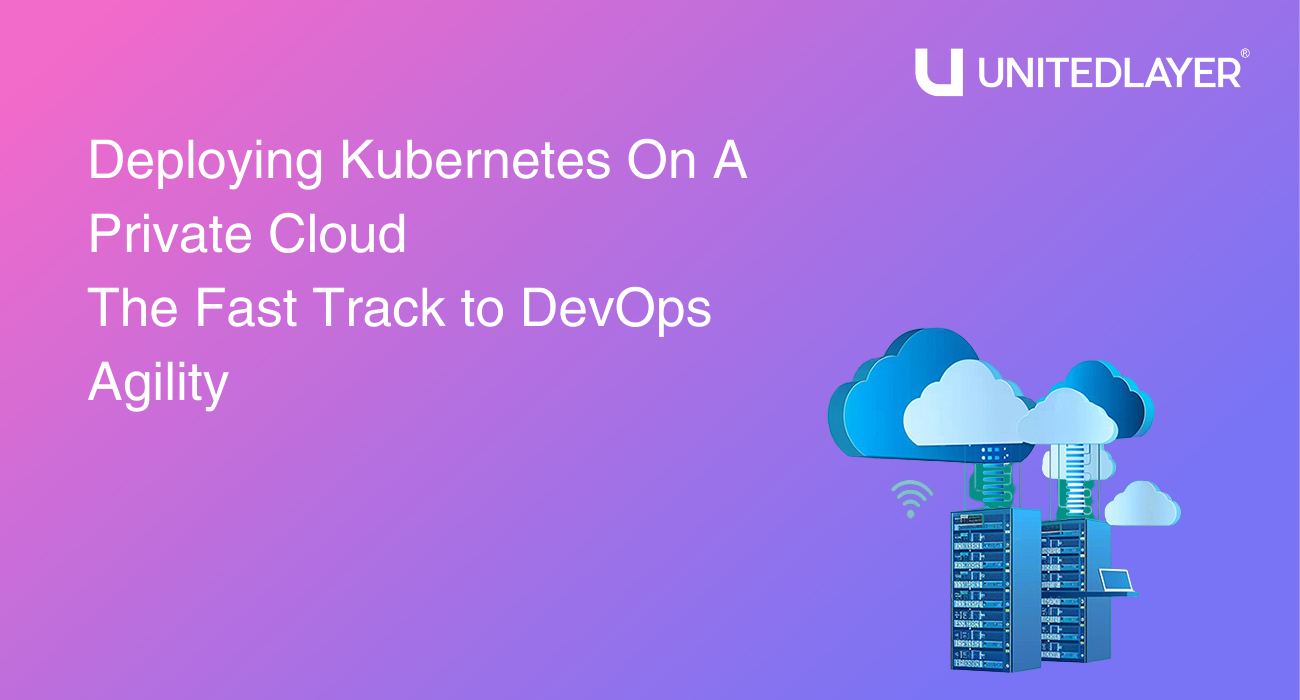
Welcome to the era where Kubernetes becomes the invisible kernel of the cloud. In the early 2010s, we went from virtual machines to containers—a shift that completely reshaped cloud-native computing. Containers package software and dependencies into lightweight, portable units that share the host OS kernel, making them far more efficient than traditional virtual machines. This architecture enables organizations to build applications that run consistently across hybrid, public, and private environments.
As containers proliferated, managing them at scale created a new challenge. Kubernetes emerged as an open-source orchestration platform that automates the deployment, scaling, and management of these containerized applications. Note that by 2026, Kubernetes will evolve beyond basic orchestration as abstraction layers, AI ops, and platform engineering now take center stage, hiding underlying complexities from developers while enabling unprecedented scale.
This blog will explore why deploying Kubernetes on a private cloud environment matters, provide a step-by-step implementation guide, examine the core benefits of private cloud K8s, and highlight the specific advantages of United Private Cloud®.
With surging demand for speed, sovereignty, cost predictability, high-availability, and scalability, businesses are rapidly moving to private cloud Kubernetes.
Enhanced Security and Isolation: Private clouds provide complete physical and logical isolation. Workloads run on dedicated hardware with full control over encryption standards, network architectures, and authentication mechanisms. This enables the implementation of exact data locality controls and custom security frameworks that align precisely with organizational policies.
Regulatory Compliance and Data Sovereignty: Private cloud Kubernetes ensures data remains within approved geographic and legal boundaries. This physical control provides tangible guarantees that simplify audits and satisfy regulators who demand granular evidence of data-handling practices.
Predictable Performance and Low Latency: Dedicated hardware delivers consistent performance with pod-to-pod communication over high-speed private networks without bandwidth contention. This supports ultra-low-latency applications such as algorithmic trading and 5G telecom cores that require sub-5ms response times with zero performance variability.
Elastic Scalability: Scale GPU clusters, storage pools, and network bandwidth independently based on workload demands. This enables seamless handling of traffic spikes while maintaining consistent performance, as resources are provisioned from dedicated pools rather than competing for shared infrastructure.
High Availability: Private cloud Kubernetes architectures deliver enterprise-grade reliability through continuous monitoring, self-healing, and automated fault recovery. In the event of container failures or node outages, the system detects the issue and initiates disaster recovery. N+M redundancy across power, cooling, and network components ensures 99.999% high-availability.
Cost Efficiency: Private cloud Kubernetes delivers 30–50% savings through transparent billing, with no egress fees or inter-AZ charges. Organizations with predictable workloads achieve lower total cost of ownership than those with managed services that charge per API call and per data transfer.
Infrastructure Independence: Built on open-source technologies such as OpenStack and Kubernetes, private cloud deployments help prevent vendor lock-in. This portability ensures workloads move between environments while maintaining consistent operations, giving enterprises strategic flexibility to shape long-term cloud strategy without external dependencies.
Together, these advantages make a compelling case for enterprises seeking performance, governance, and cost efficiency. The next step is understanding how to deploy Kubernetes (K8s) on a private cloud environment with precision and scalability. Let’s break it down step-by-step.
Step 1 – Assess Workloads and Compliance Requirements
Identify applications requiring data sovereignty, GPU acceleration, or ultra-low latency. Map regulatory frameworks such as HIPAA, PCI DSS, or GDPR that govern data residency and security controls. This assessment determines cluster architecture and isolation requirements before implementation begins.
Step 2 – Choose the Right Private Cloud Platform
Select a platform that aligns with your performance, compliance, and automation goals. United Private Cloud (UPC) offers compliance-ready architecture, sub-4-minute cluster provisioning, and native integrations with Helm, ArgoCD, and GitOps—enabling seamless migration from public cloud K8s without pipeline refactoring.
Step 3 – Design the Cluster Architecture
Define node pools with GPU-specific instance types, storage classes using erasure-coded persistent volumes for durability, and RDMA networking for MPI workloads. Design for hardware-level isolation between tenants to ensure dedicated compute, storage, and network fabrics.
Step 4 – Automate Deployment with Templates
Leverage dashboard templates for AI/ML, financial services, and edge computing workloads. These pre-configure node autoscaling, GPU device plugins, and network policies. Deploy production-grade K8s clusters in minutes with validated configurations that pass CIS benchmarks out-of-the-box.
Step 5 – Connect Securely and Manage Access
Auto-generate kubeconfig files with embedded RBAC roles and integrate with corporate identity providers via OIDC. Enforce single-tenant isolation combined with zero-trust network access. Keep all API endpoints private by default to eliminate public internet exposure.
Step 6 – Optimize for Performance and Cost
Implement direct PCIe passthrough for 40% faster GPU throughput and predictive autoscaling for resource efficiency. Take advantage of transparent pay-per-use pricing with zero egress fees. Right-size clusters automatically based on workload patterns to maximize cost savings.
Step 7 – Enable Monitoring and Backups
Deploy built-in UnityOneAI, Prometheus, and Grafana dashboards for real-time metrics, Velero for application-level backups, and high-availability with automated snapshots. Configure retention policies and geo-redundant backup targets without third-party tooling.
Step 8 – Integrate CI/CD and AI Workflows
Use ArgoCD with GitOps to automate deployments from Git repositories. For AI/ML acceleration, deploy NVIDIA TensorRT inference servers and RAPIDS data science containers directly on GPU-optimized nodes. Integrate Kubeflow pipelines for MLOps at scale.
With a secure, high-performance cluster in place, the next step is optimizing for hybrid operations and intelligent workload placement. United Private Cloud (UPC) excels in hybrid operations by maintaining a private core while seamlessly bursting to public clouds when additional capacity is required. Using Direct Connect equivalents and Kubernetes federation, UPC automatically balances workloads across its private infrastructure and AWS or Azure environments. Sensitive pods remain protected within geo-fenced UPC regions, while stateless applications scale out dynamically during peak demand.
Cost optimization is built in. Define intelligent bursting thresholds (e.g., trigger public scaling at 80% CPU utilization) and still pay zero egress fees to UPC. Unified visibility is provided through UnityOne AI and Prometheus/Grafana dashboards, ensuring real-time insight into hybrid workloads.
Migration is just as simple. Back up existing EKS or AKS clusters with Velero, then restore them to UPC in a matter of hours. Zero-downtime deployments ensure continuous operations throughout the transition.
Whether it’s financial DevOps teams scaling fraud detection ML models during transaction spikes or telecom providers orchestrating hybrid edge environments for 5G surges, UPC orchestrates it all—securely, efficiently, and without complexity.
Deploying Kubernetes (K8s) on a Private Cloud Environment empowers enterprises to achieve DevOps velocity, AI readiness, and cost efficiency without compromising security or sovereignty.
United Private Cloud® combines single-tenant security, GPU-native performance, and AI-ready automation to deliver a platform purpose-built for modern DevOps and MLOps. Organizations deploying Kubernetes (K8s) in a private cloud environment with UPC consistently achieve ~40% faster AI/ML training cycles, 5x faster DevOps velocity, and 50% lower total cost than hyperscalers. Whether scaling a 1,000-pod AI swarm or managing hybrid 5G workloads, UPC empowers enterprises to deploy, iterate, and innovate without friction. It is the foundation for innovation at scale.
Ready to Experience DevOps Nirvana? Spin up your free Kubernetes Proof of Concept (POC) on United Private Cloud today. See how deploying Kubernetes (K8s) on a private cloud environment transforms your DevOps velocity and cost efficiency.

Mansi is a Content Strategist at UnitedLayer, specializing in product marketing. She demonstrates writing fluency across cloud computing, AI, and emerging technology. Her work operates at the intersection of technical depth, structured thinking, and narrative clarity, grounded in deep product, trend, and scope research.




Mansi singh